Mountain Valley Software — Australian made text adventure 1981–1987 — tribute site
← All games
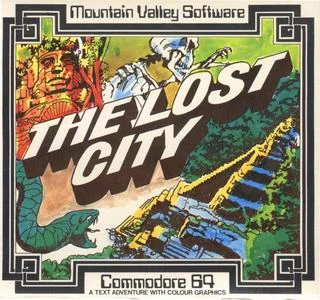
The Lost City box artwork

The Lost City

Commodore 64CassetteDisk

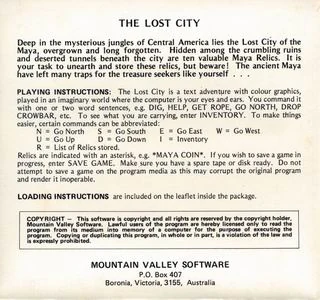
Deep in the mysterious jungles of Central America lies the Lost City of the Maya, overgrown and long forgotten. Hidden among the crumbling ruins and deserted tunnels beneath the city are ten valuable Maya Relics. It is your task to unearth and store these relics, but beware! The ancient Maya have left many traps for the treasure seekers like yourself . . .

Transcribed from the cassette inlay.

1984 · Copyright 1984 on the disk loading screen; advertised October 1984

Play it

The disk image is under “From the archive” below. It runs in VICE, which is free for Windows, macOS and Linux, or on a THEC64. Two-word commands: DIG, HELP, GET ROPE, GO NORTH, DROP CROWBAR. The hint sheet below has the solutions.

How it plays

Commands the manual gives as examples: DIG, HELP, GET ROPE, GO NORTH, DROP CROWBAR.

R = List of Relics stored. Relics are indicated with an asterisk, e.g. *MAYA COIN*.

Screens
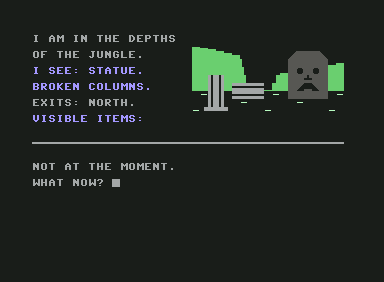
In game
In game
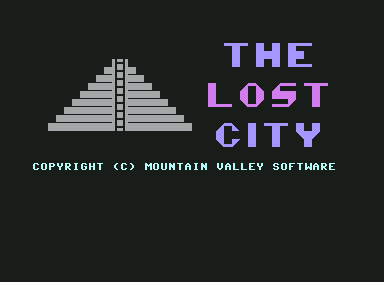
Loading screen — cassette
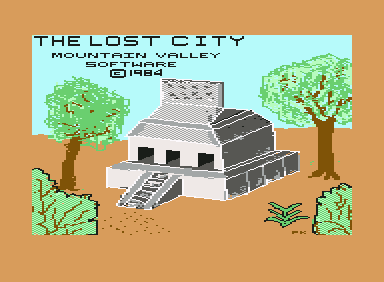
Loading screen — disk

Design notebook

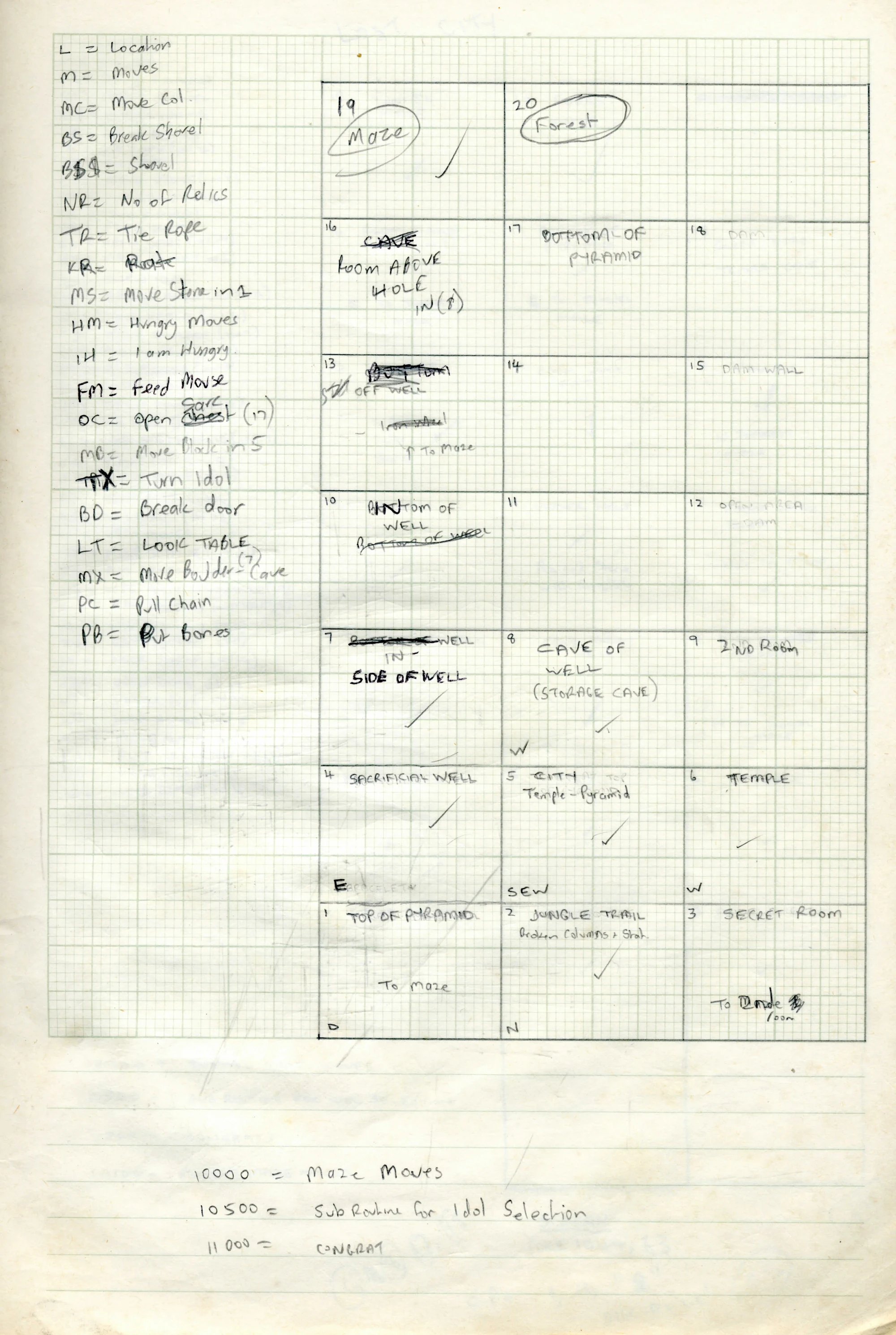
From Brian Betts’s working notes, scanned flat. Open a page to read it full size.
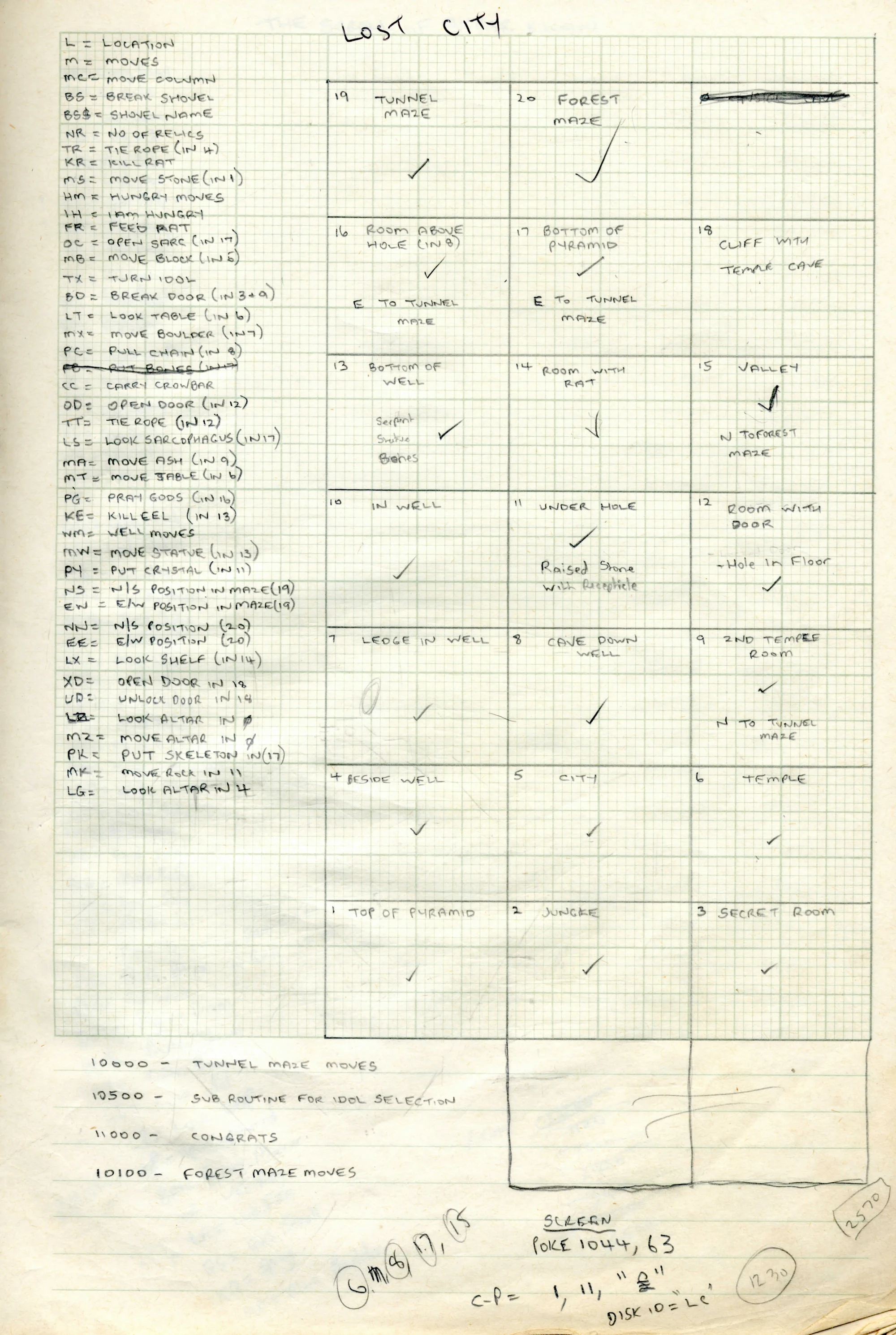
The Lost City location grid with every room ticked, and the abbreviation key, handwritten in pencil
The location grid, with every room ticked, and an abbreviation key that gives the room each puzzle is in. Under the grid are the BASIC line numbers of the tunnel-maze and forest-maze routines, the idol-selection subroutine and “11000 – CONGRATS”.
An earlier, unfinished draft of The Lost City location grid, with crossed-out room names and blank squares
An earlier, unfinished version of the grid above, with the same abbreviation key and the same routine line numbers at the foot. Squares 11 and 14 are blank, and many rooms are crossed out and renamed. “City” became “Temple – Pyramid”, the jungle was a “jungle trail”, and the rooms down the well are named differently. Three squares are pencilled faintly for a dam (“open area – dam”, “dam wall”, “dam”), which is gone from the final grid and from the game.
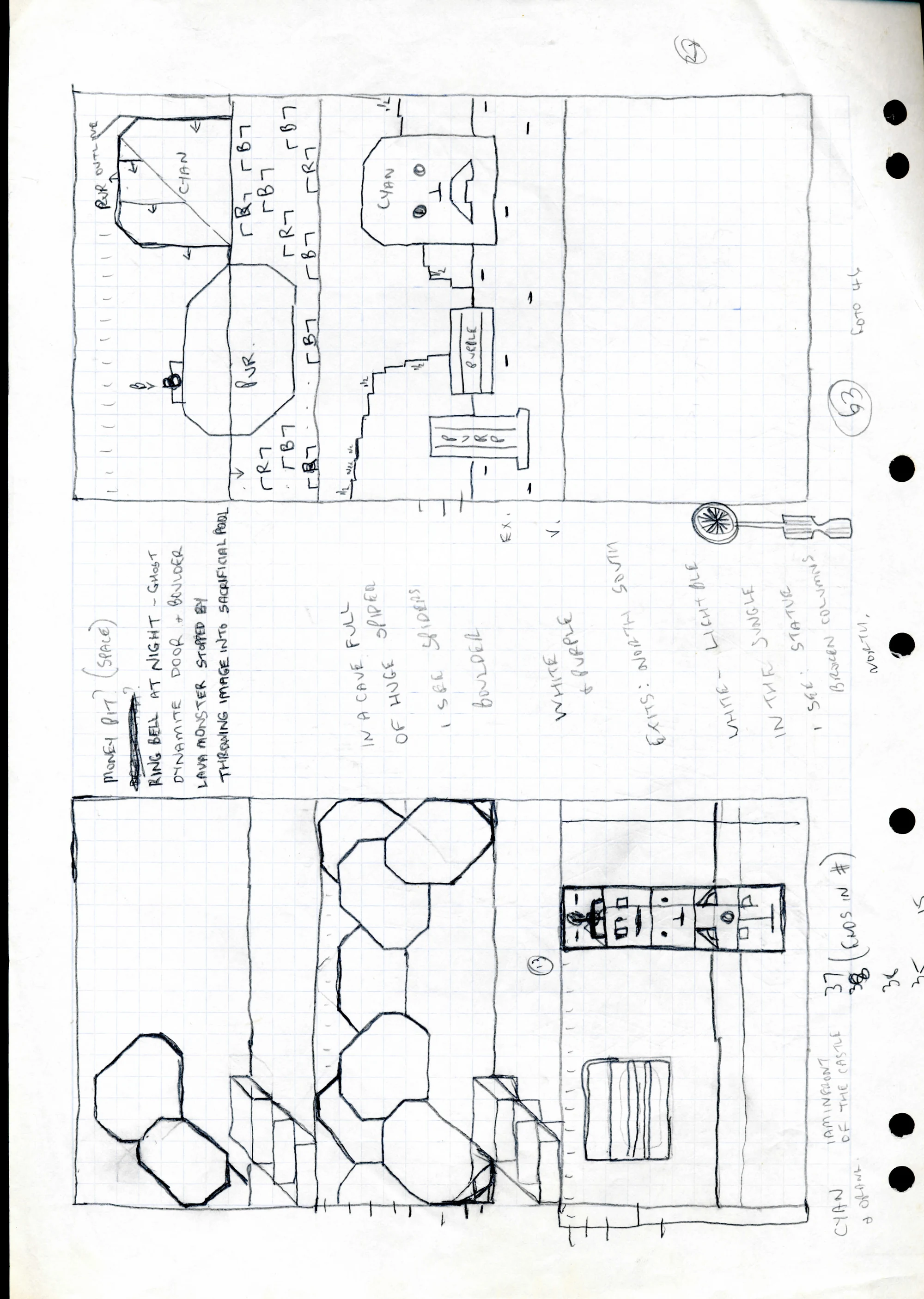
Graph-paper drawings of the jungle scene: a pyramid outline, a carved head marked cyan, steps and a statue
Graph-paper designs for the pictures drawn beside the room text. The carved head marked “cyan”, the statue and the broken columns are the jungle scene under Screens above, and its room text is pencilled beside it: “In the jungle. I see: statue. Broken columns.” That text, and a spider cave beside it, are two screens of the 1984 store demo word for word, so the sheet looks like planning for the demo as much as for this game. That would explain the margin notes from other games: a bell rung at night, dynamite and a lava monster belong to The Volcano of Raka-Tua.

Earlier cover

A second, unbordered cover design for this title, and most likely the packaging it had before October 1984. That autumn Mountain Valley told dealers it had “completely redesigned and upgraded” its cover artwork, and the list of titles it sent out with the October offer shows every game in the bordered design at the top of this page. Only titles already in the range have a design like this one: the two released with the redesign, Himalayan Odyssey and The Volcano of Raka-Tua, do not. The letters are in the archive.
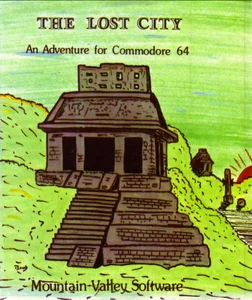
The Lost City — earlier, unbordered cover artwork
Open the image to see it full size.

Reviewed

  • 85% — Commodore Magazine, vol. 5 no. 6, c. 1985 Read it
  • 23% — Zzap!64, August 1985 sold in Britain by Step One, £14.95 on cassette — “the vocabulary is just as poor and the responses are just as feeble” Read it

From the archive